
The Last Dangerous Decade
How 1970s Hollywood Let Directors Run Free…and Then Wrestled Control Back
In the early 1970s, American cinema underwent a radical reordering of power. The old Hollywood system, built on rigid studio hierarchies, contract players, and carefully controlled narratives, collapsed under the weight of cultural upheaval, competition from television, and a younger audience alienated by glossy escapism and outdated narratives. In its place emerged a brief, volatile moment when studios, desperate for relevance, relinquished creative control to a generation of maverick filmmakers. Many were film-school educated, deeply influenced by European art cinema, and willing to confront political corruption, sexual anxiety, racial tension, and moral ambiguity. What followed was not simply a stylistic shift, but a fundamental transfer of authority—from the studio front office to the director’s chair.
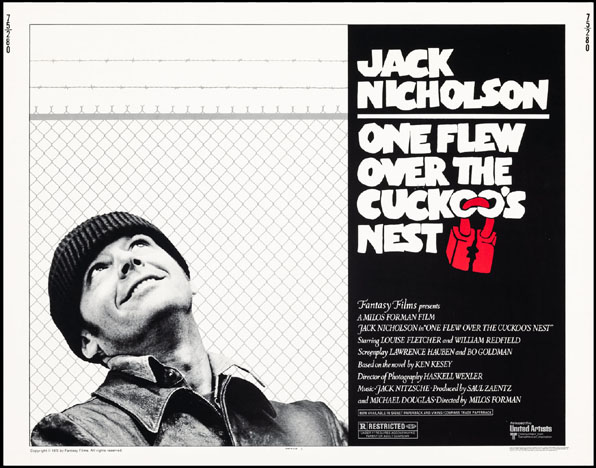 One Flew Over The Cuckoo’s Nest
(United Artists, 1975)
Half Sheet
Director: Milos Forman
Filmmakers such as Martin Scorsese, Francis Ford Coppola, Robert Altman, Stanley Kubrick, Sidney Lumet, Alan J. Pakula, and William Friedkin rejected the polish and certainty of classical Hollywood in favor of grit, paranoia, and psychological complexity. Films like Mean Streets, The Godfather, Network, Serpico, Taxi Driver, Chinatown, All the President’s Men, and The Conversation reflected a nation fractured by Vietnam, Watergate, and institutional collapse. Heroes were compromised, endings unresolved, and authority figures suspect. Stylistically, these films embraced handheld cameras, naturalistic performances, and ambiguous moral terrain…techniques that once existed at the margins of American cinema but now defined its center.
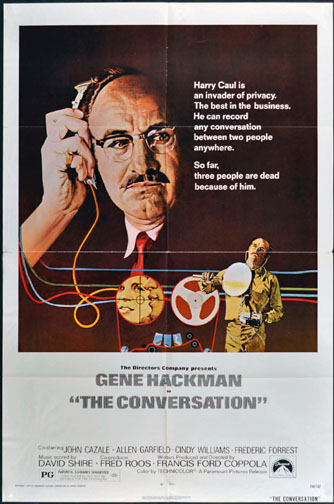 The Conversation
(Paramount Pictures, 1974)
One Sheet
Director: Francis Ford Coppola
Genre film-making was simultaneously torn apart and rebuilt. Directors including Sam Peckinpah, Dennis Hopper, Brian De Palma, John Carpenter, Roman Polanski, Nicolas Roeg, Walter Hill, and John Schlesinger used crime films, horror, science fiction, and the western as vessels for provocation and unease. Works such as A Clockwork Orange, Straw Dogs, The Last Movie, Carrie, The Man Who Fell to Earth, The Warriors, The French Connection, The Taking of Pelham One Two Three, and The Last Picture Show challenged audiences with violence, sexuality, and existential dread. Even enormous commercial successes like Jaws, Rocky, and Saturday Night Fever emerged from this climate of creative risk, personal visions that connected with mass audiences before formulas hardened and became the mainstream norm.
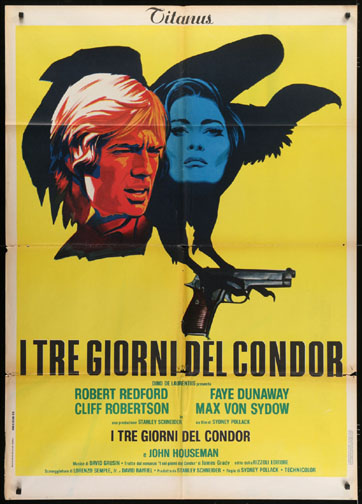 Three Days Of The Condor
(Paramount Pictures, 1975)
Italian 2-Folio
Director: Sydney Pollack
The decade also expanded who was allowed to tell American stories. Filmmakers such as Gordon Parks, Gordon Parks Jr., Melvin Van Peebles, Hal Ashby, Milos Forman, Michael Ritchie, John G. Avildsen, Joseph Sargent, Robert Clouse, and Philip D’Antoni brought new perspectives on race, class, masculinity, rebellion, and institutional power. Films including Shaft, The Seven-Ups, Dog Day Afternoon, One Flew Over the Cuckoo’s Nest, Nashville, and The Exorcist blurred the line between art cinema and popular entertainment, proving that challenging, politically charged films could also be commercially viable.
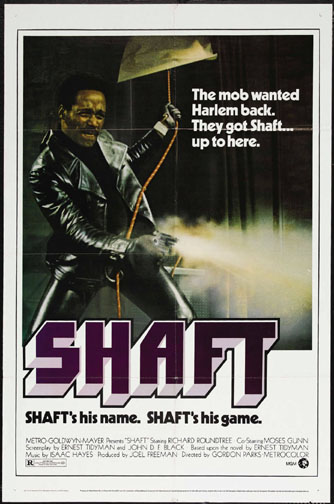 Shaft
Shaft
(MGM, 1971)
One Sheet
Director: Gordon Parks
Yet the very successes of the 1970s contained the seeds of its undoing. As budgets ballooned, risks multiplied, and a handful of high-profile failures shook studio confidence, Hollywood moved decisively to reclaim control. The lessons learned from Jaws and Star Wars were not about creative freedom, but about scale, predictability, and corporate oversight. By the early 1980s, the director-driven experiment had largely ended, replaced by franchise logic and market-tested storytelling. However, as Martin Scorsese’s cinematic masterpiece “Taxi Driver” turns fifty this year, the films of the 1970s remain enduring precisely because they were allowed to be dangerous, politically, morally, and artistically. It was the last time Hollywood placed its faith in uncertainty, and the last decade when losing control briefly made the movies unique, unpredictable, and yes… great.
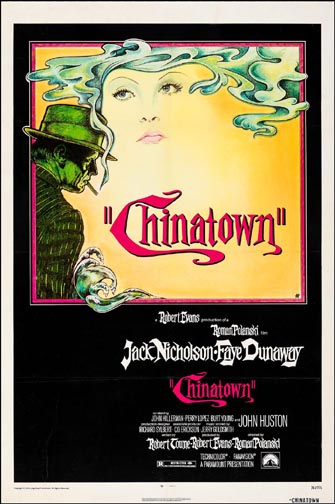
Chinatown
(Paramount Pictures, 1974)
One Sheet
Director: Roman Polanski
Artist: Jim Pearsall
For a brief, electrifying moment in the 1970s, Hollywood let go, and the movies became dangerous. Directors were given unprecedented freedom, studios lost their grip, and American cinema was transformed by films that were gritty, political, provocative, and unforgettable.
Check out our curated selection of original vintage posters that captures this fleeting era when directors were granted unprecedented creative freedom—when films challenged authority, blurred moral lines, and reflected a nation in upheaval. These pieces are as old as the films they represent: authentic artifacts from the last decade Hollywood allowed auteurs to truly take risks, resulting in timeless works that continue to be revered today.